


Scientific Background
HydroCure Wraps® are based on the traditional Priessnitz hydrotherapy method, developed in Central Europe in the early 19th century. The method uses a simple principle: a cool, moist application followed by natural warming.
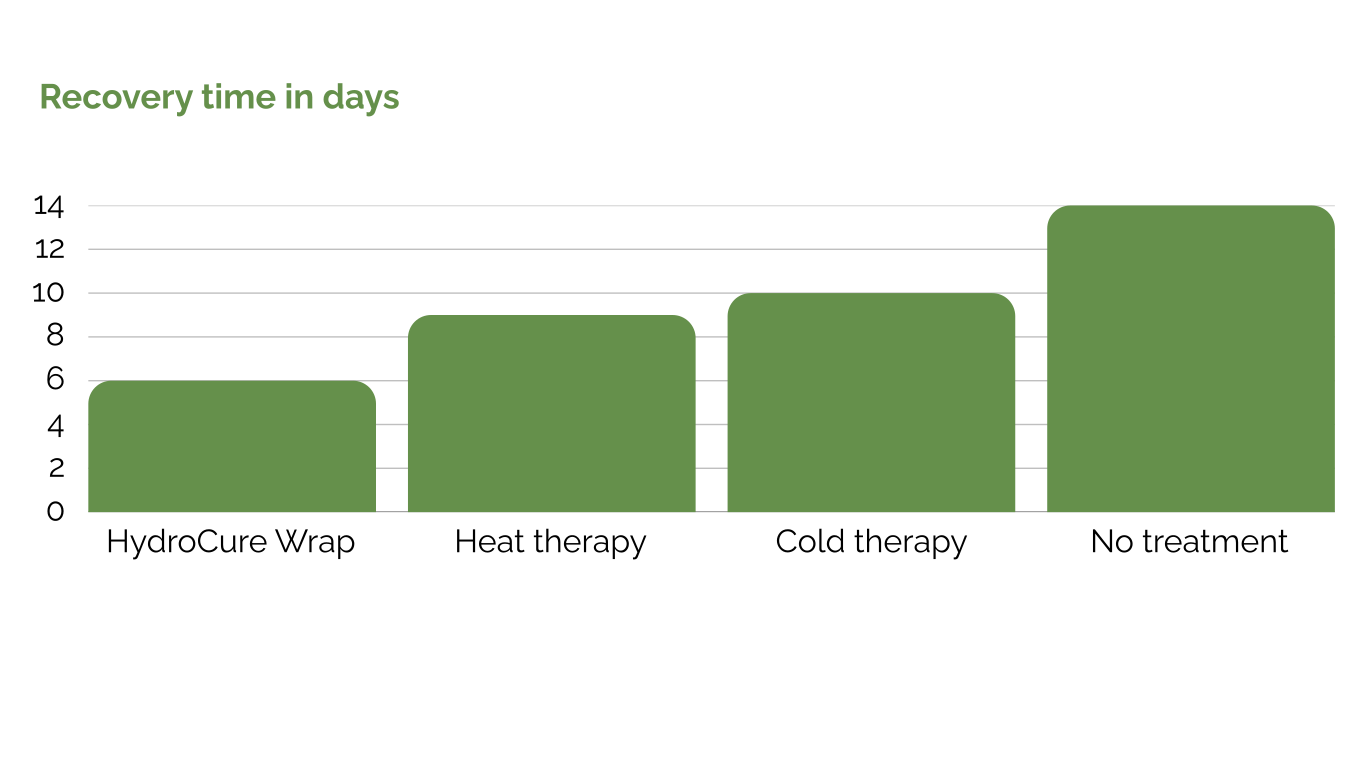
The “Cool–Then–Warm” Response
From a physiological perspective, the Priessnitz wrap activates the body’s thermoregulatory and circulatory responses.
The initial cooling of the skin causes vasoconstriction — a temporary narrowing of blood vessels. This is followed by vasodilation, where blood flow increases as the body restores warmth to the area.
This cycle of cooling and warming supports local circulation, oxygen delivery and the removal of metabolic byproducts — processes that play a role in natural tissue recovery and comfort.
Relation to Modern Hydrotherapy
While the traditional Priessnitz wrap itself has not been extensively studied in modern clinical trials, its underlying principles align with established hydrotherapy and contrast temperature research.
Studies on contrast water therapy — which alternates cold and warm exposure — suggest beneficial effects on circulation, recovery and perceived comfort compared to cold exposure alone.
For example, research has shown that contrast water therapy may support recovery of muscle function and performance following physical strain.
Reference: Vaile, J., Halson, S., Gill, N., & Dawson, B. (2008). Effect of contrast water therapy on recovery of cycling performance and muscle function. International Journal of Sports Medicine.
Bridging Tradition and Modern Understanding
The Priessnitz method became part of a wider European water-cure movement, influencing spa traditions across Europe, including the United Kingdom.
HydroCure Wraps® bring this traditional approach into modern life — offering a simple, reusable way to apply structured cooling and warming at home.
Rather than introducing an external agent, the method works by supporting the body’s own physiological responses.
This information is provided for educational purposes and reflects current understanding of hydrotherapy-related mechanisms. It is not intended as medical advice.