


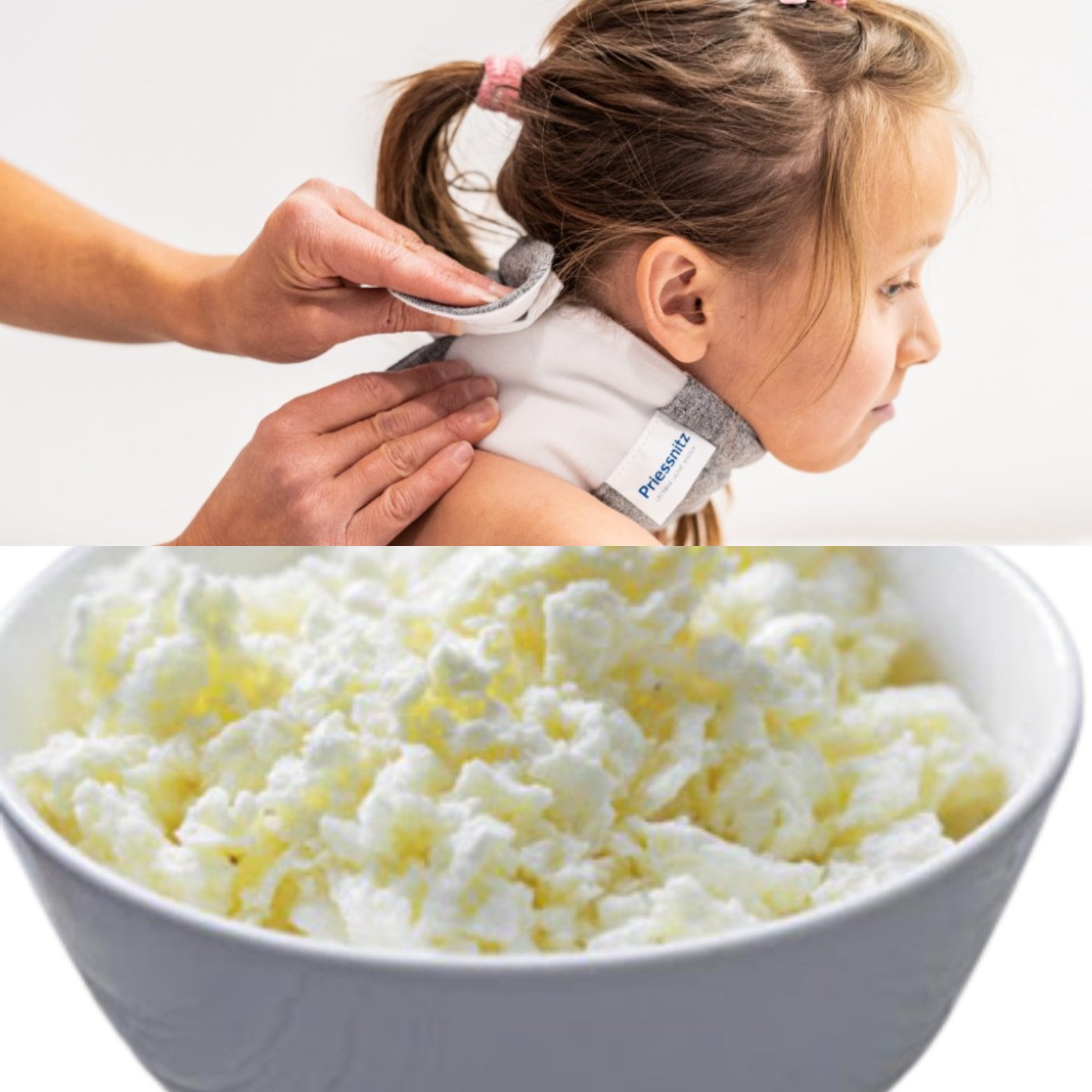
Curd wraps: an old-fashioned remedy that still makes sense
In my family, curd wraps were one of those “grandmother things” that everyone just knew. A cool layer of curd on a sore spot, then a wrap over the top — and you’d often feel calmer and more comfortable surprisingly quickly. People used to say it “draws the illness out”. In plain terms, many families use it because it can feel cooling and soothing on hot, irritated or swollen areas.
How to prepare a cold curd wrap
This is a traditional home method. If symptoms are severe, getting worse, or you’re unsure (especially with children), it’s always best to check with a pharmacist or GP.
Ingredients
- Cold curd / cottage cheese
- Optional: 1–2 cloves of garlic (crushed) or a splash of milk
- Your wrap (or a clean cloth + something to hold it in place)
Comfort & thickness
You want a soft, spreadable consistency.
- Layer thickness: 0.5–1 cm
- Snug, not tight
- Stop if skin feels irritated
How long?
Remove once the curd has warmed up.
- Usually 20–30 minutes
- Repeat with fresh curd if needed
- Some people prefer evening use for longer rest
Step-by-step
- Mix the cold curd with a small splash of milk to make it soft and spreadable. (Some people add a little crushed garlic.)
- Spread a layer about 0.5–1 cm thick onto the affected area, or onto the inner layer of the wrap.
- Place the wrap over it and fasten so it sits comfortably (snug, but not tight).
- Remove once the curd has warmed up — usually around 20–30 minutes.
- If needed, repeat with fresh curd.
Where people commonly use curd wraps
These are traditional examples. Use common sense, listen to the body, and stop if anything stings, itches, or feels wrong.
Sore throat (external neck wrap)
Apply curd on the outside of the neck (or spread it onto the inner layer of a neck wrap), fasten gently, and remove after about 20–30 minutes. Many people repeat up to 3 times a day using fresh curd each time.
Fever (cooling support)
Traditionally, curd was used on the chest, calves, or the soles of the feet (inside a sock) to give a cooling, comforting effect. If fever is high, persistent, or in children — seek medical advice.
Cough / chest discomfort
Spread curd on the chest and secure with a chest wrap for 20–30 minutes. Some people repeat up to 3 times a day.
Burns (including sunburn)
A thin layer can feel soothing on mild irritation. Avoid broken skin, and seek medical help for anything serious, blistering, or extensive. Remove when warmed.
Insect bites
Apply a small amount to the area for short periods, a few times a day, if it feels soothing.
Bronchitis / chest tightness
Some families use a curd chest wrap as a comforting, cooling application. If you’re concerned about breathing, chest pain, wheeze, or symptoms linger — speak to a pharmacist or GP.
Breast inflammation / mastitis
Traditionally, curd was used after breastfeeding as a cooling application. Keep it gentle and clean, remove after 20–30 minutes, and seek advice if you feel unwell or symptoms don’t improve quickly.
Conjunctivitis / sore eyelid
Be very careful with hygiene near the eye and avoid getting anything into the eye. In practice, it’s often safest to follow pharmacy guidance for eye symptoms.
Inflammation, joint & muscle discomfort
Spread curd onto the area (or onto the inner layer of a knee/wrist wrap), fasten comfortably, and remove once warmed. Many people prefer evening use for longer rest.
As always: if something feels “not right”, stop. And if you’re dealing with anything serious or persistent, please get medical advice.
Wishing you good health,
Pavla